Categories
Portfolio

The failures of the Afghanistan War, explained

Prominent voices from USC and other communities detail 20 years of inadequate policy in the Middle East.

By Diego Ramos

October 12, 2021

Link to original article

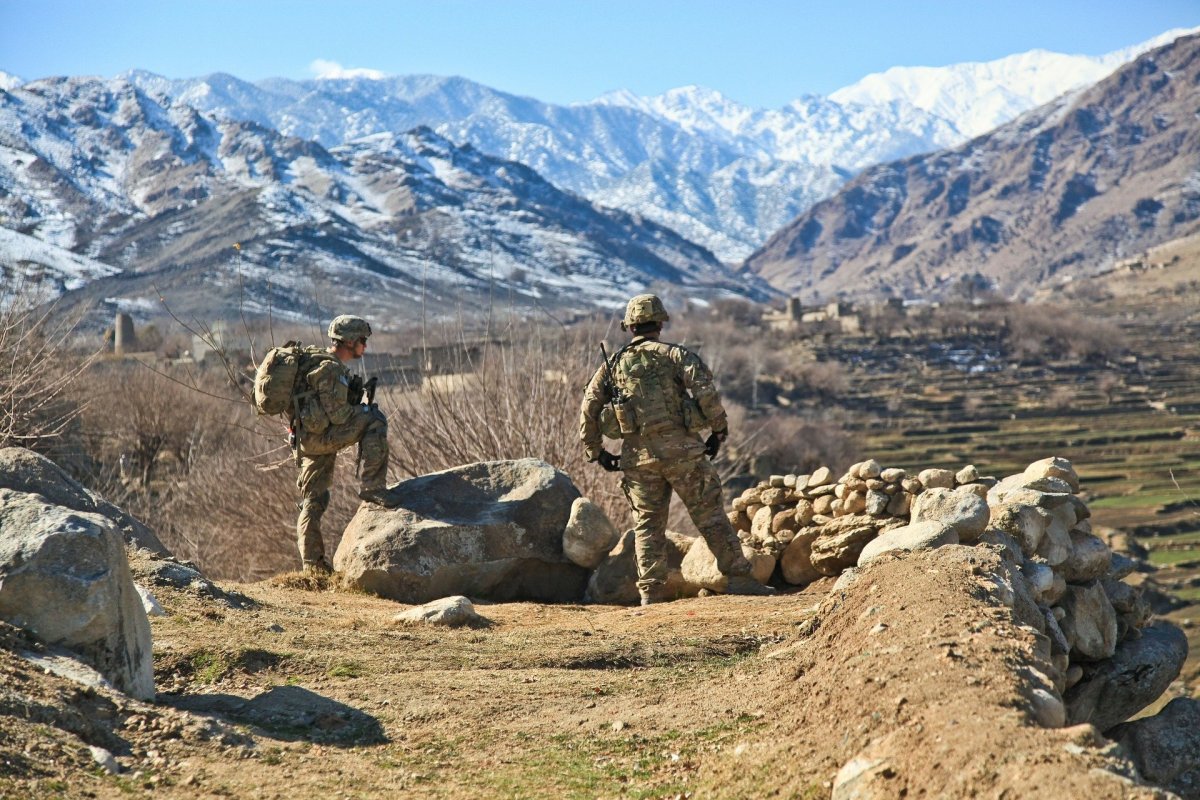
The two-decade Afghanistan War had a monumental impact on the United States and ripple effects around the world. This reach has been felt at USC, where the news of U.S. troop withdrawal and the subsequent collapse of the Afghan government presented some students with a difficult moment during the start of the semester.

Aisha Sarwary, a fifth year student majoring in public policy, has family in Afghanistan. Sarwary, the president of the USC Afghan Student Association, has watched with disappointment as the situation in Afghanistan unfolded.

“There is no other way to characterize the overall 20-year war as anything other than failure,” Sarwary said.

She and other people within the Afghan diaspora feel there are a myriad of overlooked issues that should have been at the forefront of discussions as the occupation carried on year after year.

Sarwary feels the attention on Afghanistan is far too little, far too late—especially considering the amount of lives lost, the amount of money spent and the amount of resources exhausted in Afghanistan.

“We are angry and tired,” Sarwary said. “We are tired of the media trying to whitewash 20 years of brutal occupation with cheap propaganda pictures of Marines holding our babies.”

The Forgotten War

Arguably nothing is more emblematic of war in America than images of an engaged public, whether that’s through the collective effort of Americans to work in factories to produce war-related equipment during World War II or the anti-Vietnam War protests in the 1960s in response to the draft, which sent nearly two million men overseas.

This time around, the wars that followed that dark morning in September 2001 consisted of an all-volunteer military force, one that allowed the American public to be removed from the direct impacts of the war.

Ali Olomi was in middle school when the U.S. invaded Afghanistan in response to the Sept. 11 attacks. Twenty years later, Olomi is now a professor and historian of the Middle East and Islam at Penn State Abington University, teaching about the war that has been ever-present throughout his life and the lives of his students.

“We’ve gotten used to it as simply a reality that’s going on in the background,” Olomi said. “It’s a war that’s there, but we’re not really paying attention to it. It’s not forefront in our minds. We’re not worried about it. We’re not anxious about it.”

USC Clinical Professor of Communication Robert Scheer expressed similar sentiments about the attitude surrounding the war in Afghanistan through the past few decades.

“Clearly the public is not tuned in, has not raised tough questions about [the war] and it has just gone on like a video game that people can watch if they feel like it or not,” Scheer said.

Olomi emphasized that the increased attention from the media and U.S. officials towards the crisis in Afghanistan is an aberration, rather than the norm.

“Now we’re paying attention because there’s a humanitarian crisis, but this humanitarian crisis is not new—it’s simply a new iteration of the 20 years of devastation and destruction that has been waged in Afghanistan, both by the Taliban who have carried out violent terrorist attacks, but also from the U.S., which has been a military occupying force in the country,” Olomi said. “So Afghans have been caught in the middle.”

Similar strategy, similar fate

Critics believe the war and occupation has been a repetition of historically unsuccessful U.S. military campaigns to engineer a society similar to theirs through the installation of allied governments, economic stimulation and domestic policy changes.

Philip Seib, professor emeritus of journalism and public diplomacy at USC, said the U.S. has been trying to democratize foreign countries for decades.

“Nation-building doesn’t work, and it is time that U.S. policymakers recognized this,” Seib said. “Trying to impose ‘American values’ on a foreign society is a waste of time, money and lives.”

The practice, in this case, was an attempt by the U.S. to rebuild Afghanistan in its own image; to bring peace and stability to the region by funneling billions of dollars into training a national army and implementing a centralized capitalist government among other policies.

However, the reality on the ground was much more dire. The Washington Post’s “Afghanistan Papers” revealed a defective state, riddled with corruption and a society unprepared to handle the burden of idealistic, unrealistic and flawed American impositions on Afghanistan.

Much of the discourse around the beginning of the war often centered around the fight for women’s rights in the country, the safety of children and defeating the Taliban. Despite these goals, women still experienced violence, children were abused and the Taliban remained intact and strong. Meanwhile, U.S. forces gave away hundreds of thousands of dollars that ended up in the hands of the people they were supposed to be fighting through payments made to protect U.S. supply truck convoys from the Taliban and other warlords. This, along with the killing of civilians and lying to the American taxpayers paying for it, defined just a few examples of incompetence in the war.

“We share responsibility for the U.S. casualties and for civilian casualties where a war is taking place,” Seib said. “American voters are affected by not only the moral dimensions of this, but also by economic and other geopolitical factors related to ‘endless war.’”

The U.S. also sought to introduce a spin-off of its own war on drugs to curb the production of opium in Afghanistan, as well as a pricey boot camp for Afghan national security forces and a widespread distribution of infrastructure funds.

What actually transpired is a counternarcotics program—whose tenure overlooked almost $9 billion spent—that saw Afghanistan produce around 90% of the world’s illicit opium supply and become a narco-state with opium accounting for nearly half of the country’s gross domestic product by 2008.

The Afghanistan National Defense and Security Force effort, which the U.S. helped to rebuild, resulted in armies teeming with corruption—fed with billions of dollars of grossly unaccounted support—who were unwilling to fight for the government they were hired to protect.

A government, largely inexperienced with handling the billions of dollars the U.S. was pouring into it, ended up rife with corruption and wealth disparity and saw a harrowing toll on ordinary citizens.

Historians and former military officials point to some of the most pertinent problems that stemmed from 20 years of occupation.

“The U.S. basically set up a predatory kleptocracy in Afghanistan that victimized the people of Afghanistan,” said Matthew Hoh, a former U.S. Marine and State Department official. “This government was no better than the Taliban government that it replaced. This is why you can see how so many people are supporting the Taliban victory in Afghanistan, because it’s an end to the predation of the Afghan government.”

Hoh, who gained national attention when he became the first U.S. official known to resign in protest of the Afghan war, told Annenberg Media that America’s influence proved to be harmful to the Afghan population.

“You had in Afghanistan [the U.S.] putting into power these warlords and drug lords that brutalized the people, that preyed upon the people,” Hoh said.

Olomi, however, points out that some aspects of Afghan society did get better and there were moments of hope for the people of Afghanistan. The growth of society and the development of certain institutions—like women’s education and participation in public office—are some examples that beckoned optimism for people.

“It was also a lot of the same,” Olomi said. “We saw the corruption expand. We saw the government get very wealthy. We saw warlords take over, drug traffickers end up cutting deals with the United States and the Taliban.”

Basket of beneficiaries

“As an Afghan, I strongly believe America came to our country to make money,” Sarwary said. “Not only did us Afghans experience death, displacement and trauma but we watched America rape our lands from its natural resources.”

If there were any winners to come out of this war, it certainly wasn’t U.S. troops or the Afghan population, but rather the defense contractors working behind the scenes, orchestrating deals and negotiations for armaments and mineral excavations.

Headlines from 2010 pointed to the potential value of minerals in the regions. By 2016, despite former President Trump continuously expressing support to end the war in Afghanistan, he struck a deal with Afghan President Ashraf Ghani to allow U.S. companies to develop the country’s mineral resources and cement a few more years of the U.S. presence in the country.

An Intercept article reveals the market-defying performance of defense stocks since the invasion of Afghanistan by the U.S. in 2001. The basket of stocks from the five major defense contractors outperformed the market by 58% and rose around 873%. To put this in perspective, if someone had thrown around $10,000 into defense stocks in the fall of 2001, they could’ve cashed out with almost $100,000 today.

“You can’t understand the explosion in wealth in the D.C. region as any other thing than the profits from the war industry,” Hoh explained.

Despite President Joe Biden erroneously assuring a Taliban takeover was not inevitable, former President Dwight Eisenhower was able to predict this pattern of profit from endless war back in 1961.

In his famous farewell speech at the White House, he warned the American people of the rise in “unwarranted” power by the military industrial complex, a junction of defense contractors and the military itself. In the modern military context, this looks like $300 million spent by the U.S. in Afghanistan everyday for 20 years.

What’s next?

Despite the withdrawal of U.S. troops, the state of affairs in Afghanistan remains grim. Violence plagues Taliban rule—Kabul has come under attack by terrorists and U.S. airstrikes aimed at ISIS-K members ended up unintentionally killing 10 civilian family members, including seven children.

While the withdrawal is finalized, some prominent figures in the foreign policy community believe American work is not done in Afghanistan and that the U.S. needs to go back to defeat ISIS, suggesting there is still an incentive for the U.S. to return.

“As Afghans, we are witnessing history repeating itself,” Sarwary said. “When you consider the propaganda that was pushed in 2001… women wearing burqas, individuals ‘concerned’ about women’s rights and assertions that Afghanistan was a ‘breeding ground for terrorists,’ it’s all occurring right now.”

Hoh also mentions this as a hypocritical point for the international community and global media to make, as troop withdrawal has finally completed.

“You’ll hear many Americans talk about it now. We were there to liberate women and protect women,” Hoh said. “How can you say that you’re in a country to protect them when you are shredding them to pieces and burning them alive with your bombs?”

As top military and government officials continue to debate the events that transpired on Aug. 30, people like Hoh and Sarwary believe it is time to also withdraw from making decisions for sovereign countries.

Sarwary makes it clear that even though Afghan Americans do not know what it’s like to live in Afghanistan during these times, it’s important to listen to Afghan voices.

“It’s not our place to dictate what should happen there,” Sarwary said. “The average Afghan is not pro-Taliban or pro-America. The average Afghan wants peace and stability.”

The USC Afghan Student Association started an emergency support fund to donate to various organizations helping refugees and victims of the war. For more information, visit https://bit.ly/3ixMYZw
Categories
Portfolio

[Annenberg Media] University Park campus grapples with safety concerns

An increase in burglaries around off campus housing leaves students uncomfortable with current conditions

September 21, 2021

Link to original article

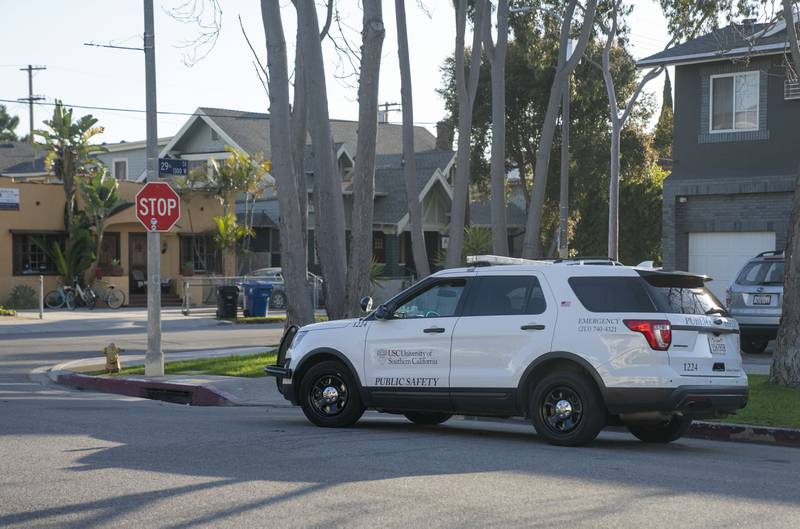
The area surrounding the University Park Campus has seen an increase in burglaries, with some cases involving suspects entering students’ homes while they are inside, according to the Department of Public Safety.

DPS issued a safety advisory notice to students last week with tips on how to stay safe and prevent further burglaries. DPS Assistant Chief David Carlisle says it’s an unusual trend and he encourages students to follow steps to protect themselves and their property.

“In some cases [burglars] have gone in and helped themselves to food. In one case, they were actually in the students’ bathroom taking a shower,” Carlisle said in an interview with Annenberg Media.

Carlisle attributed these cases to a rise in both the student and unhoused community populations around campus, especially after the pandemic.

Theater major and senior Fiona Baquerizo witnessed these incidents from her part of the neighborhood near West 30th St.

“My neighbor’s car just got keyed last week and [the] people across the street had a break in,” she said.

Baquerizo also mentioned she’s unsure how to bring attention to unhoused community members experiencing mental health episodes outside of her house without sounding rude or privileged.

“You’re kind of stuck between a rock and a hard place because I want to help people. And if you want to take my cans, I’m not going to be like ‘Get out of here,’” she said.

Brenda Wiewel, former director of the USC Homeless Initiative, says there is more than meets the eye behind the increase in unhoused people in the USC community.

“The thing about mental health is some of the people who are on the streets have had tremendous trauma in their history and then when they’re on the street, just trying to survive to get their basic needs met, it can be very traumatic,” she said.

Wiewel hopes that DPS will start to implement a mental health response team that would deal with these issues rather than calling the police.

“The police will look for anything that somebody does, which is against the law, even if it’s very minor, and then they will arrest them and they are more likely to not treat them in a way that responds to their mental or emotional state,” she said.

Baquerizo and her housemates have already begun to adhere to the prevention tips sent by DPS by putting up lights on their porch as well as emphasizing how her housemates keep themselves accountable.

“No matter what, we always have the door locked. We’re pretty on top of each other about that. And we’ll call each other out, if the door’s left unlocked,” she said.

Closer to campus, Gateway residents feel like their residence has enough measures to keep them protected.

Electrical and computer engineering major and junior Emma Gronstad says, “I generally feel pretty safe at Gateway. I have really, really reliable roommates and we always like to travel together. So, I haven’t had it too terrible in relation to break-ins.”

Other students have also noticed incidents on their streets.

“We’ve seen a couple house break-ins. And we’ve seen a couple car break-ins where they smash the windows and steal things from inside people’s cars on the street,” said Emma Marcussen, a senior majoring in business administration.

Marcussen says she feels safe in her home but is also discouraged by the school’s notice to remember to lock their doors, keep their lights on and hope for the best.

She also mentioned how a DPS officer told her all she can do is “lock our door or close our windows and that the crime is going to keep happening since the people who are arrested are only arrested for the night,” a statement which Carlisle reiterated.

Carlisle recommends students living off campus to follow the tips given in the safety advisory notice and for students to keep their lights or TV on to give the impression someone is home.

“If you have trusted neighbors, ask them to keep an eye on your place while you’re away. But all too often, those minor precautions are not taken,” Carlisle said.

He also encourages a policy of “lock it, hide it, keep it,” which refers to not leaving things unattended in a home’s common area in case of someone opening the door and quickly taking something.

Students can call different numbers depending on their situation. Carlisle recommends calling the DPS emergency number (213-740-4321) in cases of emergency. The Homeless Outreach Mobile Engagement (HOME) 24/7 hotline from the LA County Dept. of Mental Health can be used in cases of addressing the needs of the unhoused and mentally ill. They can be reached at 1(800) 854-7771.

Categories
Portfolio

[Annenberg Media] Immigrants under TPS and DACA are entering a crucial phase in confronting the future of immigration policy

Judge rulings on two immigration issues sparks fear and uncertainty in immigrant communities.

August 11, 2021

Link to original article

Over the past two months, two major court decisions have left the lives of thousands of immigrants living in the United States under temporary protective programs with questions about their future in the U.S.

In June 2021, the United States Supreme Court unanimously ruled Temporary Protected Status (TPS) in the United States is not a legal means of entry into the country. In a separate ruling, in July, a federal judge in Texas ruled that the Deferred Action for Childhood Arrivals (DACA) is unlawful, blocking new application approvals and denying pending petitions.

Many consider these major decisions indicators of the government closing rather than opening pathways for immigrants.

DACA

DACA came to life in 2012 when the Obama administration installed a deferred action policy allowing undocumented immigrants entering the U.S. as children to be protected from deportation. The policy also allowed them to work and study at American schools. DACA recipients, however, only make up a percentage of a larger population of undocumented immigrants who came to the U.S. as children, known as “Dreamers.”

U.S. District Judge Andrew Hanen’s recent ruling found DACA unlawful and prevented the Department of Homeland Security (DHS) from accepting new applications. The motion comes as a result of a group of states, led by Texas, suing the government for the program, which they deem unconstitutional.

The ruling puts the nearly 650,000 young, undocumented immigrants living in the U.S. in difficult positions when considering their future within the country. Until a solution can be reached, they face an unpredictable environment.

“I fear, of course, being deported and I also fear I won’t be able to obtain a good job if I don’t go to college,” said Diana, an undocumented freshman at USC. “It feels like we’re always in jeopardy and we constantly have this false hope even though we worked hard and tried to compile all the documents for our application.”

Diana is not a DACA recipient, but is one of the many Dreamers whose prospects of applying to the program were left for dead following former President Trump’s recession of DACA in 2017. Trump attempted to end the program in 2017 with the support of powerful government officials like Former Attorney General Jeff Sessions. Following this attempt, DACA renewals continued but new applicants were not allowed to apply until 2020.

Diana has been public with financial difficulties coming into her first year at USC, setting up a GoFundMe to try and support her education. The added uncertainty with DACA contributes to the stress.

“To be criminalized just puts a huge target on your back and it makes you question a lot of the reasons why you’re here,” she added. “You feel like you’re not deserving.”

The precarious nature of temporary programs like DACA is often at the forefront of student’s unease.

“It’s overwhelming sometimes knowing there is so much uncertainty where if they do take away DACA, what’s going to happen to me,” a DACA recipient told Annenberg Media, who requested anonymity for safety reasons.

The anonymous recipient recalled how often she was aware of her illegal status as a child, even being told not to mention her Salvadoran heritage by her parents.

“Many kids were traveling with their parents or going places but we couldn’t and my parents didn’t like going out,” she said. “They didn’t like doing anything.”

Without a permanent solution, even those currently living under DACA face the fear of being deported, a concern that the policy was designed to protect its recipients from.

The Biden administration said in a statement in July that the Justice Department intends to appeal the decision and hopes Congress can produce a permanent solution to help DACA recipients. His hope lies with the American Dream and Promise Act, which may replace DACA in the coming months. This bill would grant Dreamers a status of “conditional permanent resident,” meaning they would be protected from deportation and allowed to work and study if they meet a series of prerequisites. It would also allow them to apply to become permanent lawful residents—or green card holders—in the future.

Transitioning to a more permanent solution is what activists and lawyers like Judith Wood, an immigration lawyer based in Los Angeles who has worked to help women fleeing from violence seek refuge in the U.S., encourage.

“I think people with DACA should be offered a road to citizenship,” Wood said in an interview with Annenberg Media. “I know that a lot of people in Congress do think that DACA recipients should be able to adjust status and become citizens.”

Attorneys like Wood emphasized the importance of a path to citizenship because temporary measures like DACA may end up leaving the fate of people’s livelihoods contingent on the current state of the government.

Since the suspension, DACA has been going back and forth between lawsuits and appeals, and the DHS was able to start accepting new applications on Dec 7, 2020. But the new ruling brings another stop to new application acceptances.

While current DACA recipients are still allowed to renew their status, this ruling may mean the loss of protections allotted by the program, barring a permanent solution passed by Congress. The decision also puts Dreamers without DACA protections in jeopardy of being shut out of the program.

Although the decision is expected to be appealed to the U.S. Court of Appeals for the Fifth Circuit, their history—siding with another Judge Hanen ruling against Deferred Action for Parents of Americans and Lawful Permanent Residents (DAPA)—indicates it is unlikely they restore DACA.

“DACA faces an uphill battle for survival,” says Laurence Benenson of The National Immigration Forum, adding that even if DACA were to reach the Supreme Court, the 6-3 conservative majority is not an encouraging sign.

TPS

The Temporary Protected Status (TPS) Program was introduced in 1990 when Congress passed the Immigration Act of 1990. The program allows immigrants experiencing an ongoing armed conflict, environmental disaster, or extraordinary conditions in their designated country to enter and work in the U.S. Those who wish to be granted TPS must be a national from the list of designated countries, must have filed for registration during a specified interval and must have been physically present in the country since a specified date.

TPS recipients do not have a direct path to permanent residency (green card) or U.S. citizenship.

TPS differs from refugees seeking asylum, in that there is not an extensive process to prove specific circumstances to warrant asylum. Asylum seekers have a more direct path towards a green card and those under TPS are threatened with having their status removed at any point in time, something the Supreme Court ruling brings to the forefront.

The June Supreme Court ruling designating TPS as an unlawful means of entering the country makes it increasingly more difficult to apply for permanent residency. TPS holders who entered the country without inspection and wish to obtain a green card would have to leave the U.S. to have their visa processed at a consulate. This, however, could result in someone with an unlawful presence in the U.S. being barred for three years if they spent more than 180 days and less than a year in the country or ten years if they spent more than a year.

“This decision is a step back for the immigrant community who has very limited ways to secure relief,” said Camila Alvarez, legal director of the Central American Resource Center of LA, in a statement to immigrant communities and supporters. “The ruling reiterates that the time is now for Congress to pass legal protections and, even more importantly, to do it in the next reconciliation package and exhaust all legislative possibilities.”

For those who have established themselves in the U.S. since the time of their country’s TPS designation, the recent decision may uproot their families and businesses, warranting an immediate call for action.

“They relied on this, they paid all the fees, they did everything right, and now they’re being stripped of their rights,” said Wood, who has been working for 35 years with immigration rights and political asylum. “It’s about stripping people’s lives, sense of security and well-being who are already here and have been here for quite a while.”

Wood said she worries that those with TPS are caught between difficult circumstances, as they lack security in either the U.S. or their home countries. Immigrants with TPS often spend decades away from their origin countries and do so because of very complications that keep these countries on the TPS list.

Proponents of TPS have been pressuring the government on behalf of the hundreds of thousands of immigrants with TPS living in the country. Advocacy efforts are often headquartered in states like California, which is home to the most TPS holders in the country, with just under 18% of a population of over 400,000 foreign nationals.

“Congress could really just reverse this by simply getting the legislation passed and finally getting it signed into law and just providing this pathway for millions of people to obtain green cards,” said Erik Villalobos, a spokesperson for the National TPS Alliance, an organization created by TPS beneficiaries to advocate for and support immigrants.

The National TPS Alliance is currently pushing for legislation that supports a pathway to citizenship and their efforts have resulted in extensions to attempted terminations.

The TPS designation for El Salvador, Sudan, Nicaragua and Haiti was extended until October 4, 2021 pending the outcome of a lawsuit challenging Former President Trump’s attempt to terminate in 2019.

Despite the extension, the decision to categorize a TPS entry to the country without inspection as unlawful still leaves thousands in limbo.

Jean Lantz Reisz, the co-director of the USC Immigration Clinic, said she does not agree with the Supreme Court ruling and worries decisions like this can lead to a misunderstanding of immigration as a whole.

“I think that there’s a lot of misinformation and people think somebody is being reckless with their children by trying to cross the border or that somebody is trying to cut in line by not applying for a visa,” said Reisz. “But the reality is, a lot of people who are poor aren’t eligible for visas because the US doesn’t give visas to people unless they have financial resources.”

Reisz also believes that programs and laws like TPS should be interpreted to create a pathway for immigrants to integrate themselves into the country, become citizens and have a voice in the system.

“It’s just this idea of somebody, because of where they’re from, that’s how you determine how hard of a worker they are, what kind of crimes they’re going to commit,” Reisz said. “That’s just an antiquated, xenophobic, racist sentiment that is built into our legislative system right now. So the laws need to change.”

solution could come in the form of something like the 2022 reconciliation package, which would include provisions such as a path to lawful permanent residence for those with DACA and TPS. As Senate Majority Leader Chuck Schumer unveiled the budget framework, he called on committee members to draft legislation for the listed goals—including “providing green cards to millions of immigrant workers and families,” according to a summary—by Sept. 15.

Categories
Portfolio

[Annenberg Media] USC plans to return to normal campus capacity in the fall

As vaccinations and reopenings increase, so does the likelihood of a return to normalcy on campus.

Link to original article

June 11, 2021

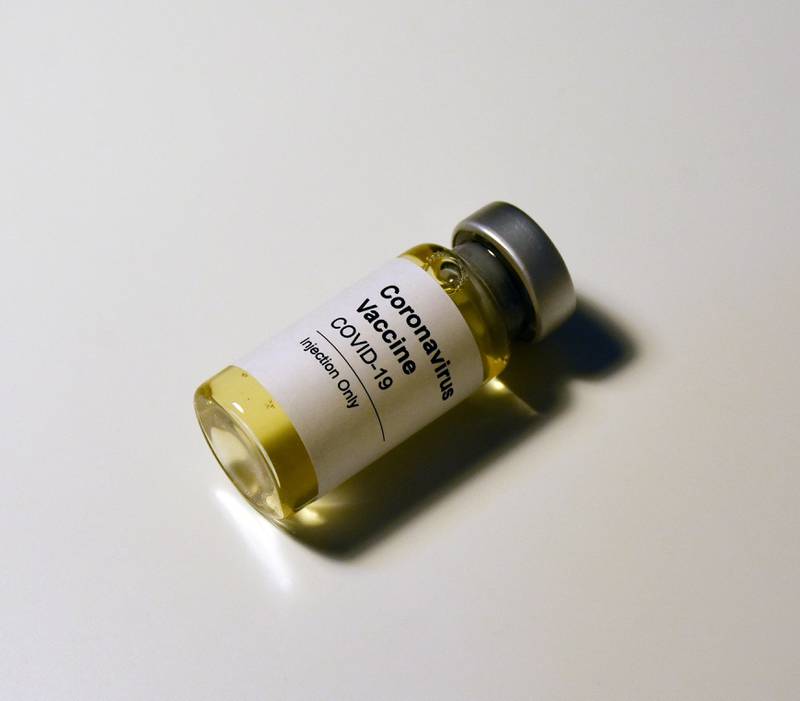
As California continues to reopen, USC plans to return to “normal” campus capacity and operations in the fall and align its expected policies with those of the state, with the exception of vaccination incentives, according to USC’s Chief Health Officer Dr. Sarah Van Orman.

The state of California is offering vaccination incentives, such as cash prizes given out to random vaccinated California residents. USC wants student health to be a priority, but does not plan on incentivizing students to get vaccines. The school does not want to exclude certain students and staff from perks or activities, noting that some people may not be able to get inoculated for various reasons.

“Sometimes [there] are barriers around access, like [people] just can’t get the time off work or it’s too hard to get to a vaccine site or they have transportation issues… we as an institution don’t want to necessarily say, we’re going to give something to people who have been vaccinated, but if you just can’t be vaccinated for medical or religious reasons, you don’t get this,” Dr. Van Orman told Annenberg Media on May 28.

Other elite universities such as UCLA are requiring students to be vaccinated once the vaccine has full approval by the FDA. USC, a much smaller campus and student population, will allow vaccinated and unvaccinated students alike to share its campus and classrooms, according to Dr. Van Orman.

Students may decline vaccination without a specified reason and will be allowed to return to campus and engage in regular campus activities and events, provided they fill out a vaccine declination form and undergo surveillance testing.

The testing would occur twice a week for undergraduate students and once a week for graduate students. USC has been using the Trojan Check system, which offered several services for the university community in the wake of the pandemic, so it can be expected to have use for the next semester.

However, in order to live in university housing, unvaccinated students must go through a formal exemption process, designed for students who cannot receive the vaccine for “narrowly defined” medical or religious purposes, which will be determined on a case by case basis. These students will be required to live in single rooms, according to Dr. Van Orman. “To put someone who’s vaccinated and [someone who’s] unvaccinated together in a shared sleeping space is not tenable,” she said.

University housing will not convert rooms intended for multiple students into singles. Single rooms are limited in availability and are often reserved for students with disabilities or other medical issues, so USC housing hopes to minimize the amount of rooms that will be occupied by unvaccinated students and maximize the amount of students who can live in university housing, with freshmen and rising sophomores being a priority.

All health and safety guidelines for housing will follow those set by the Los Angeles County Department of Public Health, and new guidelines are expected as soon as next week, according to Chris Ponsiglione, Director of Housing at USC.

Masking and social distancing on campus will be dependent on the Cal/OSHA workplace safety recommendations, which are expected to be updated sometime in the near future. As of the last update on May 6, “the University is currently maintaining a work and academic environment that adheres to the 6 ft. physical distancing, low workplace density, and masking requirements. On-campus events, activities, and in-person work continues to be limited to activities previously approved through the restart process.”

It will be interesting to see how these measures are implemented as students, staff and faculty are entitled to their privacy and cannot be asked whether they are vaccinated or not. Supervisors can only encourage people to upload their vaccination record or declination form.

The university will continue to offer vaccinations each week into the fall semester as the return of students is likely to increase demand. Dr. Van Orman says USC will even start to include more personalized approaches for those who might have questions about the vaccine with student health teams and town halls.

USC offers vaccines for current students and employees age 16 and over. All vaccines are administered free of charge at the Lyon Center on the University Park Campus, and appointments may be booked through the USC Student Health portal, or mySHR.

President Biden recently spoke on vaccination expectations for the country and points to 70% immunization as the target to, “declare our independence from COVID-19.”

USC is expected to participate in this goal through the #COVIDCollegeChallenge, according to USC Student Health. The White House says younger Americans are falling behind in vaccination numbers and through their “Three Key Commitments,” they hope to incentivize college students. These commitments include engaging all members of campus, organizing the community and delivering vaccine access to all.

While vague, the challenge allows for universities across the country — including USC — to associate their name with an official vaccination initiative. The challenge badge appears on the main USC website and Student Health says it will roll out through June. Since USC is not mandating vaccinations for the fall semester, it’s unclear how else they plan to contribute to the challenge besides the measures they’ve already put in place.

The state of California stands at around 45% of the population inoculated with nearly 18 million people fully vaccinated. Los Angeles County stands at 54% vaccinated with around four and a half million people fully vaccinated.

Categories
Multimedia Projects

[Annenberg Radio News] Staying home and taking a trip

Psychedelic drugs have served as helpful guides for some during the rough times of the COVID-19 pandemic

May 05, 2021

Link to original post, click to listen to episode

A USC alum talks about how psychedelics have been a source of relief and perspective when dealing with the onset of mental difficulties from the pandemic. Psychedelic researchers also weigh in on why some people have been turning to psychedelics during quarantine.

****************************************

The pandemic forced hundreds of millions around the world to stay inside. Taking it a step further, some people decided not only to stay inside but start looking inward, where they took a trip inside their own minds through psychedelic drugs like LSD and psilocybin mushrooms. Diego Ramos dives into how some students have used psychedelics during the pandemic.

An experienced psychonaut and USC alum spent a day in quarantine on an acid trip. We’re gonna call her Rachel. This familiar encounter with a tab of Lysergic acid diethylamide, or LSD, allowed her to travel somewhere else, spend time with herself and engage with her thoughts without the hassle of booking a flight.

Rachel: I feel like psychedelics really do feel like a vacation. It feels like you are not in the same universe as everyone else. It feels like you’re on some other planet. When I was tripping, I didn’t feel scared about the pandemic or anything. I don’t think I thought about the pandemic at all.

Now, it’s important to note that psychedelics should not be consumed carelessly as clinicians and researchers strongly advocate for people to do their due diligence and learn how to use these drugs safely and effectively.

Psychedelics let you see your reality in a different light. It places you somewhere so unique you’re left guessing how to translate it. As mystical and fantastic this experience sounds, it is only as brilliant as the language describing it allows it to be.

Rachel: like the day after I became my child self again. And I have been that way since. And like I said, the person that you’re talking to right now like this is how I was when I was seven years old, eight years old. And that’s like the craziest thing to me. And I, like, stopped caring completely what people think about me. I’m just, like, really stoked to be myself because I’m like, you know what? I really like myself. I’m pretty fucking sick.

Dr. Dave Rabin, psychiatrist, neuroscientist and psychedelic clinical researcher was able to explain some of the science. He is one of the many voices in the psychedelic research community who actively shares information and provides clarity for people interested in the field. He hosts the Psychedelic News Hour on the app Clubhouse, where he engages with thousands of people interested in psychedelics every week.

Rabin: If you use the medicine to engage with reality more fully and to self discover and self explore and self-love and these kinds of things, then you will feel more engaged and connected to your reality.

Despite facing years of stigma in the United States, psychedelic drugs are once again becoming popular. Those curious enough to discover them during the pandemic might’ve run into Dr. Rabin and his talks.

Rabin: The use of psychedelic medicines, like all drugs, has gone up during the pandemic because people are socially isolated and we are not able to get the same kind of, you know, the same kind of experiences that we could get normally when we are able to interact with each other face to face or to touch each other and be close with each other and intimate with each other.

So what else can psychedelics do? With psilocybin and LSD recently reaching phase 2 of clinical trials for major depressive disorder, the future of psychedelics as medicines is on a promising track. These trials saw rapid improvement in people with no patients seeking conventional antidepressant treatment within 5 weeks of taking psilocybin. A Johns Hopkins study also found persisting positive effects on attitudes, mood and behavior as well as mystical-type experiences for participants

One of the leading figures in the emerging psychedelic medicinal industry is Dylan Beynon, the founder and CEO of Mindbloom. Through his work, he has been able to see people benefit from psychedelic use during the pandemic, especially those who may be dealing with certain disorders. Beynon explains how patients often experience an awareness of their consciousness which allows for changes in thought.

Dylan: First and foremost, people are coming in who are looking just for relief of these symptoms throughout their experience with psychedelic therapy but end up leaving not just with relief from those symptoms, but big insights into what changes they want to make in their life and are in a state of mind where they can actually make those changes.

For a lot of people, psychedelics are able to help them view the world through a new set of eyes. The point of using these drugs for many is not necessarily to directly heal them but rather guide them to help themselves. The drugs do that by making often uncomfortable truths or unconsidered paths come face to face with someone.

Rachel: In my experience, you can understand your own thought processes. So I remember thinking, like I was just very aware of my impulses and my reactions… I just got a lot more compassionate towards other people I like, understood that. I don’t know, I think it just filled me with, like a lot more sense of unity, it made me realize that there’s something I can talk about with anyone. Like there’s not one person on this planet where if we spoke the same language, I wouldn’t be able to, like, have an interesting conversation with you about something or a conversation that we both enjoy.

The psychedelic renaissance did not stop short of the pandemic, in fact, it helped ease the troubles of those who sought help in a time of seemingly little hope. The research and conversations held by people like Dr. Dave Rabin along with the entrepreneurial efforts of Dylan Beynon show the steps how far psychedelic medicines can reach and the impact they’ve had on people like Rachel.

Rachel: It’s really interesting how that effect does feel different during the pandemic just because it’s nice to feel like the rest of the world doesn’t exist when the world is in this horrible pandemic and you can kind of focus on… like it’s difficult to stay present right now, it’s very difficult. In this exact moment, I’m OK, like I’m safe. I am with my friends, I love my friends. I love grass. I love nature. I love all of this stuff.

Be on the lookout for the newest studies headlining psilocybin or LSD or ketamine as treatment options for some of the most common problems people face, from addiction to depression. The future of these drugs is looking increasingly beneficial in medical studies and less illegitimate and worthy of a Schedule 1 label.

For Annenberg Media, I am Diego Ramos.

Categories
Portfolio

[Annenberg Media] Premier League’s Big Six Coup Attempt

Representatives from some of the biggest clubs in England are pushing for a deal that would see them gain unprecedented power within the EFL.

November 16, 2020

Link to original article

The phrase “the rich get richer and the poor get poorer,” seems to apply to a lot these days with wealth disparity becoming a growing concern for many.

Even professional soccer clubs can be affected by big business ventures within their own industry. Project Big Picture was proposed in early October by Liverpool owner John W. Henry and Manchester United chairman Joel Glazer as a push to try and change the power structure of the Premier League. The project would also bring fiscal stability to lower league clubs.

At first glance, the proposal actually seems like a decent opportunity for all parties involved. According to ESPN, the deal would inject a £250 million payment to the English Football League (EFL), which in turn would help keep its 72-member clubs from succumbing to financial downturns. A grassroots investment clause is included which would see an additional £10 million given to the Football Association (FA) to use. A percentage of revenue from the Premier League and EFL would go to clubs in the Championship, League One and League Two. Fans would also benefit from a price cap of £20 on away tickets.

The less favorable details from this deal include a size reduction of the Premier League from 20 to 18 teams, as well as the elimination of the Carabao Cup and Community Shield competitions. Teams that place 16th in the Premier League would also join a playoff with teams that place third, fourth and fifth in the Championship.

The most astonishing part of this entire project — and the factor that is driving a lot of people away from it — is the special power regarding rule changes, broadcasting rights and potential club takeovers given to nine historic Premier League clubs. Included on that list are Arsenal, Chelsea, Everton, Liverpool, Manchester United, Manchester City, Southampton, Tottenham and West Ham.

United Kingdom Prime Minister Boris Johnson expressed his disapproval of the deal for reasons EFL Chairman and supporter of Project Big Picture, Rick Parry, deemed a “hysterical” reaction. “People have seen it as a power grab but I don’t see it that way,” Parry said in an interview with TalkSPORT.

The Premier League has always been a dynamic league. Clubs like Leicester City claimed an unforeseen victory run in 2016 with 5000-1 odds at the beginning of the season and Aston Villa beat the defending champions Liverpool 7-2 at home after being on the brink of relegation last season. The implementation of such a proposal would reduce the chances of such historic feats from happening.

Project Big Picture would bring a sort of predictability and dominance of “Big Six” clubs similar to how the rest of the “Top Five” leagues in Europe operate. For the past decade, each league has seen pretty much the same set of clubs come out on top every year because of their immense resources. Bayern Munich has won 8 of the past 10 German Bundesliga campaigns, Juventus 9 of 10 Italian Serie A championships, Paris Saint-Germain 7 of the last 10 French Ligue Un seasons and Barcelona and Real Madrid dominating the last 9 out of 10 La Liga tournaments.

The only exciting competition that remains for these clubs is the Champions League, but even that might be in jeopardy with the Premier League’s immense global popularity giving them greater annual earnings than other leagues. Enabling the “Top Six” teams with greater revenue shares would certainly increase their leverage in the competition as well as other tournaments like the FIFA Club World Cup.

Categories
Portfolio

[Annenberg Media] Georgia’s historic blue flip

Stacey Abrams’ efforts to combat voter suppression in Georgia helped the state pull for a Democratic presidential candidate for the first time in almost 30 years.

November 06, 2020

Link to original article

In a late comeback, comparable to an NBA fourth quarter rally, a flip in the state of Georgia allows former Vice President Joe Biden to make yet another strong push towards the 270 mark. Georgia hasn’t voted blue in almost 30 years, dating back to 1992, when the state voted for Democratic candidate Bill Clinton. There’s one woman to thank for the assist, and her name is Stacey Abrams.

Stacey Abrams is an American politician, lawyer, voting rights activist and author who served in the Georgia House of Representatives from 2007-2017.

Abrams received a Bachelor of Arts in interdisciplinary studies (political science, economics and sociology) from Spelman College and has dedicated her political career to working tirelessly to register voters and decrease voter suppression.

All eyes were on Abrams in 2018 when she barely lost the Georgia governor’s race to Republican Brian Kemp, a race that would have made her the nation’s first Black female governor.

After her loss, Abrams told Vogue, “I sat shiva for 10 days. Then I started plotting.” Her plotting led her to found Fair Fight, an organization focused on addressing voter suppression.

Abrams’ efforts in founding the New Georgia Project, as well as Fair Fight, prompted thousands to register to vote by fighting regulations like “exact match” rules which can be used to disqualify ballots for typos and minor errors.

“I will say, of those numbers, what we are excited about is that 45% of those new voters are under the age of 30,” Abrams said in an NPR interview on Nov. 2. She also added that 49% of these voters are people of color and that the registration of the 800,000 new voters came after November 2018, which meant that these voters weren’t eligible to vote for her but could participate in the general election.

Abrams’ influence reached even farther than just Texas and Georgia, the two states Fair Fight focuses on. Wisconsin Democratic Party Chair Ben Wikler tweeted out praise for Abrams’ help in the state, which saw a similar overtime flip from red to blue like Georgia and neighboring state Michigan.

Despite razor-thin margins and historical trends, some Georgians had hope for Democratic allegiance this election. USC sophomore and Georgia native Lauren Nash said, “I feel like Georgia could be a blue state and, of course, it was proven today with it flipping blue.”

The importance of voting in her state was demonstrated by election results.

“I knew that I definitely had to vote, ” Nash said. “Georgia is super important because it could flip either way and I was really excited for it to flip blue and I am happy to be a part of that.”

Georgia ended up being a crucial part in this election with 16 electoral votes up for grabs. The last few hectic days of uncertainty have demonstrated the importance of voter turnout that Abrams has always stressed.

“Stacey Abrams had the foresight to see the demographic changes, and so she started to create the organizational infrastructure that would actually put the Democrats in place to be able to move to identify, register and mobilize new voters,” Andra Gillespie, a political science professor at Emory University in Atlanta, told ABC News.

Abrams’ foresight was laid out into a plan entitled “The Abrams Playbook.” Published on Sept. 9, 2019, the playbook highlights Georgia and the pivotal role she knew it would play in 2020. The plan concluded with five points for victory:  Contemporary research and analysis, starting early and sustaining infrastructure, communicating values rather than pandering to stereotypes, investing aggressively and seizing the momentum.

Her plan laid the groundwork for Democratic victory in Georgia. The late civil rights leader John Lewis can also share the credit as “yard signs showing images of Lewis, and quoting his statements about the importance of voting,” lined the streets in Georgia’s 5th Congressional District, according to a CNN.

Categories
Portfolio

[Annenberg Media] For college students, absentee voting is helpful, but sometimes complicated

USC students weigh in as mail-in voting offers convenience and potential complications.

October 23, 2020

Link to original article

After months of paradigm shifts due to the COVID-19 pandemic, the presidential election is facing many modifications. The pandemic has brought significant alterations to the way voting is being conducted for this election.

Many states have their own policies regarding absentee voting, which can create confusion among voters about what steps should be taken to get their vote in.

Absentee voting is allowed in every U.S. state, but was historically reserved for soldiers deployed with U.S. armed forces or those who couldn’t physically make it to the ballot.

However, as a result of the pandemic, at least 35 states have changed their policies on absentee ballot eligibility.

States like California, New Jersey and Nevada have automatically sent absentee ballots to registered voters. Some officials may use the terms mentioned before like “all-mail voting” or “universal vote by mail” in these states.

Other states like New York have tweaked policies to extend absentee voting eligibility to those who are “unable to appear personally at the polling place of the election district in which they are a qualified voter because there is a risk of contracting or spreading a disease causing illness to the voter or to other members of the public.”

Since college students often don’t live at permanent addresses and sometimes live outside of their home state to attend school, they often face difficulty voting, and the variability of registration in states does not make it any easier. For example, dorms can be rejected as proof of residency because they are not considered permanent housing. Additionally, many states require a state driver’s license or ID card, making it difficult for out-of-state students to register to vote in the state they go to school in.

Absentee ballots, therefore, are a frequently-used option. At USC, students face different voting circumstances, based on the options afforded to them.

Kevin Paul, a USC sophomore currently living in Texas–where mail-in ballots are restricted to people 65 or older, sick or disabled, out of county or in jail–is voting in-person on election day.

Even when all the right steps are taken, there can still be delays for people trying to get all their official forms and cast their vote.

Aisha Kazembe, a junior at USC living near campus, is voting in Iowa’s elections via absentee ballot. “It took a really long time for the application to get here and it’s taking a long time for the ballot too,” she said.

Some states require specific excuses or sections of the voter’s forms notarized before they can submit or even receive their absentee ballots. As a result of the pandemic, voters saw an increased accessibility to absentee ballots, which significantly helped ease the process in some states for a lot of college students.

Vishesh Amin, a sophomore at USC, who is registered to vote in Arizona, already voted by mail and had no problems.

“Voting by mail was more convenient than going to an in-person voting center, and I would prefer not to be in an area with a high concentration of people to avoid possible corona[virus] exposure,” he said.

Visit your state’s Voting Information Center to register to vote and find information about voting by mail. If you’re in California, the deadline for in-person registration Nov. 3, and the deadline for absentee ballot request is Oct. 27. The deadline for return by mail: Postmarked by Nov. 3 and received no later than Nov. 20, deadline for return in person: Nov. 3 by 8:00 p.m.

Categories
Multimedia Projects

[Annenberg JOUR 321 Project] COVID Creativity Video Project

Categories
Portfolio

[Daily Trojan] REVIEW: Frank Ocean packs simplicity and intimacy into his latest releases

Link to original article

Following last year’s release of singles “In My Room” and “DHL,” Frank Ocean returns with another taste from his rumored upcoming project. Frank has utilized pictures and symbols as a means of representing each song, with the first two shown in last year’s drops.

The two singles, which dropped late last year on streaming platforms, started this trend, featuring the same 17 silhouettes on the bottom of the singles’ covers accompanied by an actual picture from which the silhouettes seemed to be based.  

His latest, “Dear April” and “Cayendo,” which dropped Friday, fit into this mold by each featuring a new symbol stemming from the original 17. Yet, Frank chooses to leave out the actual photographs, likely due to the fact that these tracks are labeled “acoustic” and are not the final mixes for the upcoming album. 

A remix of “Cayendo” was previously teased around the same time as “DHL” on Frank’s Apple Music radio station, “blonded”, in October of last year. This Sango remix of the song carries more energy since it was flipped for the club scene, specifically Frank’s PrEP+ nightlife events in New York City. 

The new acoustic version falls in line with a more familiar sound from Frank, one that can be more associated with his 2016 record “Blonde.” It is slow and dreamy with Frank’s lyrics interchanging between Spanish and English. “Cayendo” is a stripped-down track, featuring what only sounds like a guitar and Frank’s vocals working together to create sounds that echo endlessly. 

Keeping in tune with the “Blonde” era aesthetic, “Cayendo” is very intimate and its lack of much instrumentation allows his voice to be the focal point of the track. In tandem with the washed guitar, the two create a state of isolation fitting for how many of us may be feeling in these times. 

The lyrics of “Cayendo” demonstrate how Frank has accepted an unfavorable truth about someone yet he still feels like he is falling for them. They’re succinct yet paint a bigger picture of the power of love and how strong it can be, especially when not reciprocated. Although his earlier singles were rhythmic and structured, “Cayendo” does an impressive job of tapping into simplistic, emotional storytelling.

His second single which dropped over the weekend, “Dear April,” also carries this “acoustic” label on it yet isn’t as stripped down as “Cayendo.” The same washed, dreamy guitar carries the instrumental with additional keys and synths backing it up. “Dear April” is also reminiscent of the “Blonde” era for Frank, which is interesting to note given how different the singles from last year were. While this almost signature ambient soundscape exists in all four singles, the difference in the rhythm of the tracks could suggest a past and present contrast similar to how “Blonde” is presented as two halves — with the split coming in on the beat switch for the song “Nights.” 

“Dear April” is a melancholy track with another undemanding yet effective instrumental flowing underneath Frank’s voice. The theme of love is still present; he sings of a relationship that has ended but mentally lingers. It reminds of a lyric from Frank’s song “Ivy,” in which he sings, “We’ll never be those kids again,” signifying his acceptance of reality. The line “What we had won’t be the same thing now” from the new single resonates with this theme and potentially for this “side” of the album if the duality motif from “Blonde” continues.

Both tracks are reminders of how simplistic Frank’s artistry can be while still delivering great depth through lyrics and production. It’s exciting to see where the rest of this new record will lead, especially since the non-acoustic versions of these new singles are yet to be heard. 

Frank has kept fans somewhat in the dark with very little music coming after “Blonde,” similar to his behavior post-“Channel Orange,” with only a handful of singles like “Chanel,” “Biking” and “Lens” dropping in 2017. 

With “DHL,” “In My Room,” “Cayendo” and “Dear April,” along with the vinyls he has been selling on his website, we can assume more Frank Ocean music is imminent. But that also means another possible period of disappearance could follow after…

Design a site like this with WordPress.com
Get started